
Noise pollution is increasingly becoming a common problem, especially in modern urban areas. According to a report by Nhan Dan Newspaper, more than 90% of urban residents in Vietnam are living in environments with high noise levels. To create a quiet and comfortable living space, it is crucial to choose effective soundproofing materials. In this article, we will introduce 7 top soundproofing materials to help you create an ideal living space, protect your health, and improve your quality of life.
2. Summary of the 7 Best Soundproofing Materials
There are many effective soundproofing materials available on the market today that you can consider. Below is a summary of the 7 most common and effective soundproofing materials:
2.1. Gypsum Board
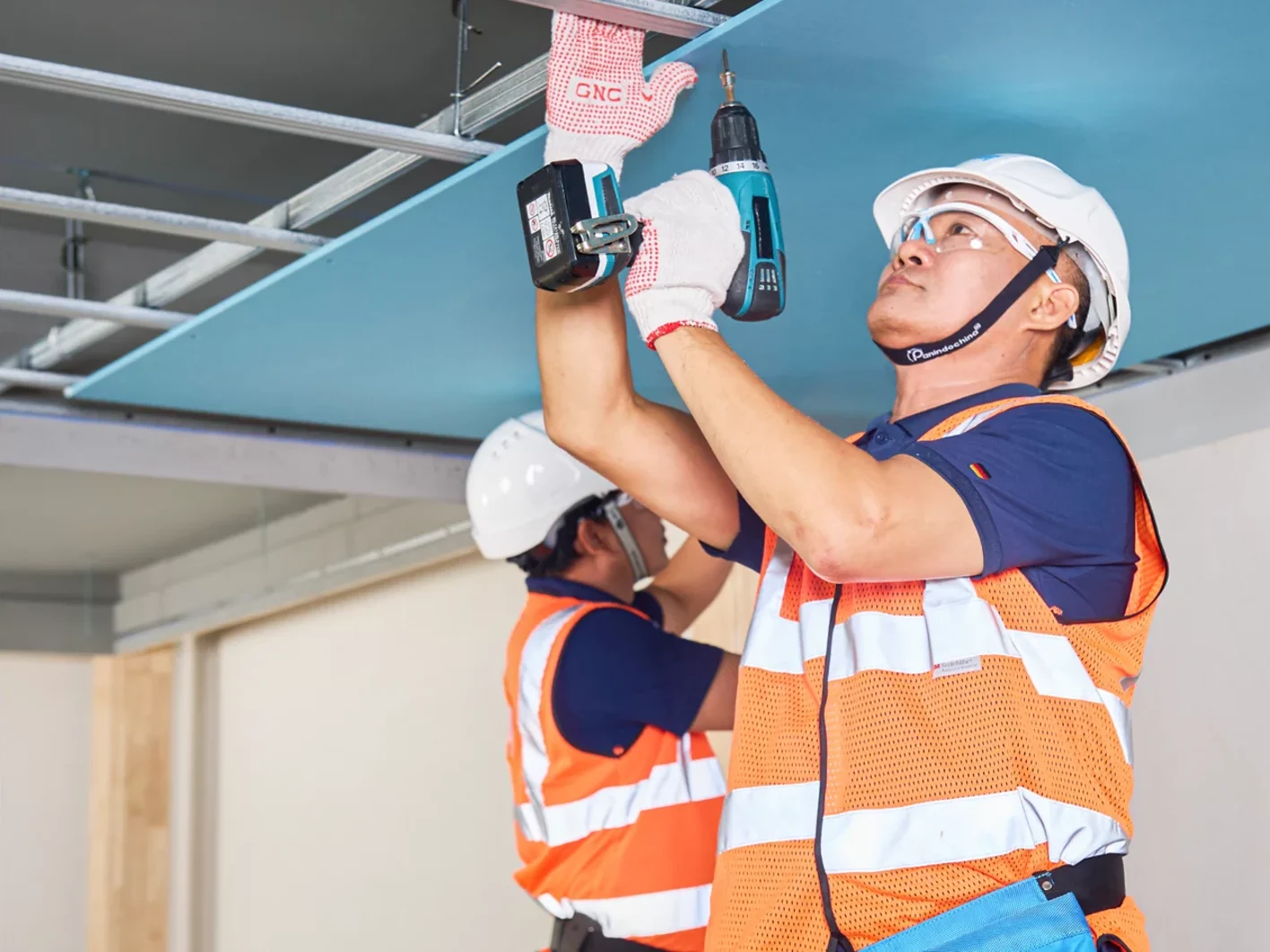
Gypsum board is one of the most familiar and effective soundproofing materials in the construction industry. The basic structure of a gypsum board consists of a gypsum core and a specialized paper liner. When used for ceilings or walls, gypsum board has a flat, smooth surface and helps block the transmission of sound, reducing external noise. The soundproofing ability of a gypsum board wall or ceiling system is very good, especially when combined with supplementary materials like fiberglass or mineral wool. A 2 to 3-layer gypsum board ceiling system can achieve a soundproofing efficiency of 50dB to 70dB, helping to create a quiet space and effectively reduce noise.
If you are looking for a high-quality, stable, and easy-to-install gypsum board ceiling solution, the StandardShield Standard Gypsum Board from Knauf is the ideal choice. The StandardShield gypsum board ceiling system solution meets standards QCVN 16:2023, TCVN 8256 (Vietnam), and ASTM 1396 (USA), ensuring superior soundproofing efficiency when combined with materials like mineral wool, making your living or working space quiet and comfortable. Knauf is also committed to providing products that are compatible with its specialized metal frame systems, which deliver long-lasting durability and aesthetics. With Singapore Green Label certification, Knauf's products are also safe, sustainable, and environmentally friendly.
In particular, when combining the Knauf gypsum wall/ceiling system with other supplementary materials, it can achieve significant soundproofing capabilities of up to 50dB, providing you with a quiet and comfortable living and working space. This product is widely used in residential homes, offices, hospitals, schools, and high-end projects such as commercial centers and restaurants. To achieve the best results and ensure a warranty of up to 5 years, Knauf recommends using the StandardShield standard gypsum board in conjunction with its AZ50 aluminum-zinc coated steel frame system.
2.2. Soundproofing Panels
Soundproofing panels consist of large sheets with flat or slightly ribbed surfaces. This material has impressive soundproofing capabilities, with an acoustic reduction ranging from 30dB to 50dB, depending on its thickness. Additionally, the product has good thermal insulation, making it suitable for use as partitions in projects that require high standards for sound and thermal insulation, such as workshops, cold storages, clean rooms, or professional karaoke rooms.
2.3. Rubber Foam
Rubber foam (also known as non-porous rubber) is a material with extremely high elasticity, often used in projects that require vibration damping, shock absorption, and soundproofing. Made from synthetic rubber, rubber foam has good load-bearing capacity and can be used in spaces such as bars, auditoriums, karaoke rooms, and movie theaters. Rubber foam is also combined with other materials like gypsum board and fiberglass to enhance soundproofing efficiency in projects that require strong noise reduction.
2.4. PE OPP Foam - EVA Foam
PE OPP Foam and EVA Foam are lightweight, flexible soundproofing materials commonly used in projects that require minor noise reduction or shock absorption. PE OPP Foam is lightweight and cost-effective, often used for projects with moderate soundproofing needs like homes, offices, or workshops. EVA Foam has good elasticity and is used in furniture and padding to reduce noise from minor impacts and vibrations, making it suitable for spaces that need light soundproofing.
2.5. PE Acoustic Foam
PE acoustic foam is a material made from Polyethylene plastic, which has good sound and thermal insulation capabilities due to its flexible thickness ranging from 5mm to 30mm. With its lightweight nature, water resistance, abrasion resistance, and chemical resistance, PE foam is a popular choice for many projects that require light soundproofing and cost savings. This material has a moderate soundproofing ability, with some products capable of reducing noise by up to 23.08dB. PE foam is often used in bedrooms, offices, factories, and other spaces that need to reduce external noise or noise between rooms.
2.6. XPS Acoustic Foam Panels
XPS foam panels are produced through an extrusion and heating process, creating special Polystyrene foam panels with high rigidity and resistance to moisture, termites, and mold. XPS foam panels are widely used in projects that require both soundproofing and thermal insulation, such as walls, floors, ceilings, and roofs. With their high compressive strength and durability, XPS foam panels are suitable for construction projects that need to reduce noise from the external environment and maintain a stable indoor temperature.
2.7. Fiberglass Insulation
Fiberglass insulation is a common soundproofing material, especially effective at absorbing sound. Composed of thin glass fibers bonded together to create a lightweight, porous structure, fiberglass helps reduce noise and increase thermal insulation for buildings. This material is often used between wall layers, between a brick wall and a gypsum board, or between partitions. Fiberglass insulation is also an ideal choice for projects that require both soundproofing and thermal insulation, such as offices, recording studios, or areas that need to reduce both heat and noise.
2.8. Rockwool
Rockwool is a type of sound and thermal insulation material made from mineral rock. It is an effective solution for enhancing soundproofing, especially in projects that require high fire resistance. With its interwoven mineral fiber structure, Rockwool has good sound absorption capabilities and is extremely heat-resistant, helping to protect buildings from fire. This material is often used in ceilings, partitions, or soundproofing walls.
Clearly Define the Purpose and Source of Noise
Choosing the right soundproofing material is crucial for creating a quiet and comfortable living space. However, each material has different properties and effectiveness. Therefore, to make the most accurate choice, you need to consider a few factors:
Categorize the Noise: Differentiate between external noise (traffic, construction), noise from adjacent spaces (neighbors), noise from machinery, airborne noise (talking), and impact noise (footsteps). Noise Level: The intensity of the noise will determine the necessary thickness and type of material. Space to be Soundproofed: Clearly identify whether it's a bedroom, a meeting room, or a studio to make the right choice. Desired Level of Soundproofing: The desired decibel (dB) reduction will directly influence the required Sound Transmission Class (STC) rating of the material.
The Difference Between Soundproofing and Sound Absorption
When it comes to treating noise, many people often confuse soundproofing and sound absorption. However, these are two completely different concepts that directly affect the effectiveness of a project. Clearly distinguishing between them helps you choose the correct materials, avoid wasted costs and effort, and ensure the space achieves the desired level of quiet.
Soundproofing: Blocks sound waves from traveling through materials, structures, or from one space to another. Soundproofing materials typically have high density and are heavy and solid (e.g., soundproofing gypsum board, thick brick walls).
Sound Absorption: Absorbs sound waves to reduce echoes and reverberation within a room, making the sound clearer and more pleasant. Sound-absorbing materials typically have a porous, spongy structure with tiny air pockets to absorb sound waves. Common materials include fiberglass, acoustic foam (like egg crate foam), or Echobloc acoustic gypsum board.
Note: An effective soundproofing solution is often a combination of both soundproofing and sound-absorbing materials within the wall, ceiling, and floor structures.
Choosing Soundproofing Materials by Installation Area
Depending on the installation location—such as a wall, ceiling, or floor—you need to choose a soundproofing material with different properties and structures to achieve optimal effectiveness.
Walls: You can use fiberglass/mineral wool insulation placed within the hollow cavity of a gypsum board wall, acoustic rubber sheets, or specialized soundproofing gypsum board. Ceilings: Fiberglass/mineral wool placed above a gypsum board ceiling or specialized acoustic ceiling panels.
Reviewing Technical Specifications
The soundproofing and sound absorption capabilities of each material not only depend on its composition but are also clearly indicated by specialized technical specifications. To make the most accurate choice, you should check the following parameters:
STC or Rw Rating (Sound Transmission Class): This rating tells you the material's ability to block noise from entering a space. The higher the STC rating, the greater the effectiveness. NRC Rating (Noise Reduction Coefficient): This rating helps you evaluate a material's sound-absorbing capability. The higher the NRC (closer to 1.0), the better the material absorbs sound. Density, Thickness, and Material Structure: These factors directly affect soundproofing effectiveness.
Material Safety
Material safety is a factor that cannot be overlooked, especially when choosing soundproofing materials. Therefore, you should prioritize products that meet the following criteria: fire-resistant, non-combustible, or have fire-resistant properties (e.g., mineral wool, some types of gypsum board); environmentally friendly and safe for health, free of toxic substances like asbestos, formaldehyde, and fine dust; and resistant to mold and mildew, especially in high-humidity areas.
Soundproofing Materials and the Finished Aesthetic of the Space
Choosing soundproofing materials not only requires ensuring effectiveness but also that they harmonize with the overall interior design. With some materials, you can leave the surface exposed and turn it into a decorative highlight, such as acoustic foam. Conversely, many other materials like mineral wool or rubber foam need to be covered with an outer finishing layer (gypsum, wood, paint) to not compromise the overall design. Therefore, carefully consider your options to choose a material that is both durable and suitable for your design style.
Soundproofing materials are a crucial element in building a high-quality, quiet living and working space. From versatile gypsum board to specialized acoustic panels, or multi-functional fiberglass, each material has its own unique advantages to meet the diverse needs of different projects. We hope that with the information above, you will be able to choose the right soundproofing material to create a peaceful, comfortable living space for yourself.
With over 90 years of industry experience, Knauf is a prestigious German brand that specializes in providing high-quality gypsum solutions to meet all construction needs. All Bnauf products are manufactured according to strict international standards such as ASTM (USA), EN (Europe), and Vietnamese standards QCVN. Knauf is proud to offer high-quality solutions that meet all aesthetic and functional requirements of a project while also committing to user health and environmental safety.
To achieve the best soundproofing results, Knauf provides a ceiling and wall system solution using StandardShield standard gypsum board and Echobloc acoustic gypsum board, combined with Knauf's specialized metal frame system. This solution, when combined with specialized soundproofing materials like fiberglass, not only ensures durability and good load-bearing capacity but also helps to reduce external noise, creating a quiet and comfortable living and working space.
For in-depth consultation on soundproofing solutions and to receive a detailed quote, contact Knauf to get advice and support in choosing the most suitable products for your project.
- Our Entities
- Knauf Gypsum
- Resources
- Products
- Download Center
- Our Services
- Connect with Knauf
- Contact Us
- Blog
- Global Career
- Social Channels