
Newsroom
Lightweight and Environmentally Friendly Materials: The Solution for Sustainable Development
1/ Application of Lightweight Materials in Construction Design
2/ Environmentally Friendly Fire-Resistant Materials
Why Choosing Lightweight Materials Leads to Effective Sustainable Development
1/ Resource Efficiency
2/ Safety for Users and Environmental Protection
3/ The Future Trend of Modern Architecture
Towards Sustainable Development Goals
Lightweight and Environmentally Friendly Materials: The Solution for Sustainable Development
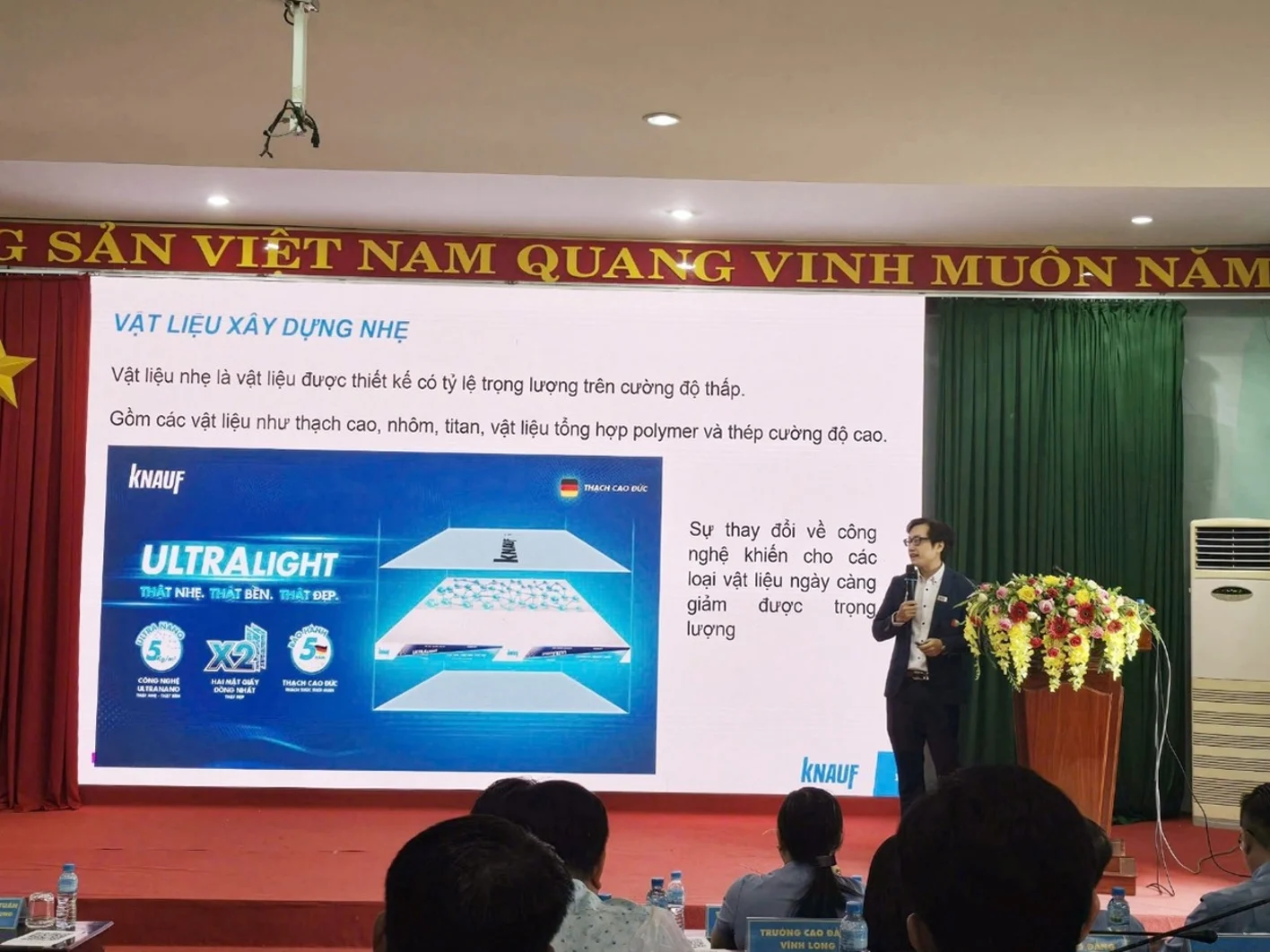
Amidst the vibrant atmosphere of the seminar with numerous issues raised, Knauf Vietnam contributed in-depth knowledge on two core areas: the application of lightweight materials in design and environmentally friendly fire-resistant materials. Mr. Nguyen Hoang Thong, the company's Technical Manager, provided detailed analyses, further clarifying the solutions that Knauf Vietnam offers.
1/ Application of Lightweight Materials in Construction Design
Faced with excessive resource exploitation leading to increasing scarcity and escalating construction costs, the search for new, efficient material solutions is becoming a top priority. In this context, gypsum emerges as an optimal choice. With its fire resistance and good sound insulation, gypsum not only ensures functionality but also brings modern, highly aesthetic living spaces thanks to its design flexibility. In particular, the rapid installation speed and low labor requirements of gypsum wall systems significantly help save construction costs and time, contributing to reducing financial pressure on investors.
2/ Environmentally Friendly Fire-Resistant Materials
According to the new regulations of the Ministry of Construction in QCVN 06/2022, ensuring the fire resistance of buildings has become a mandatory requirement. In this context, choosing an effective fire protection solution is not just an option but also the responsibility of the investor. Knauf's fire-resistant gypsum wall systems not only meet fire resistance standards but also ensure the health safety of users.
Studies have shown that many traditional fire-resistant materials contain toxic substances that seriously affect health and the environment in the event of a fire. Toxic smoke from these materials not only causes breathing difficulties and eye and nose irritation but also hinders rescue efforts. In contrast, gypsum is a natural material, free of harmful substances, environmentally friendly, and recyclable.
With reputable green certifications such as Green Label and EPD, along with meeting strict standards for VOC emission levels, Knauf gypsum has affirmed its position as a leading fire protection solution, contributing to the construction of green and sustainable buildings.
Why Choosing Lightweight Materials Leads to Effective Sustainable Development
At the seminar, Mr. Thong presented three key reasons explaining why gypsum is a leading choice for sustainable construction: What makes gypsum so special and environmentally friendly? How can gypsum effectively resist fire? And why is gypsum so popular in modern design?
1/ Resource Efficiency
Given the increasingly severe climate change, especially in the Mekong Delta, optimizing the use of natural resources is extremely urgent. A viable solution is to transition to the use of gypsum in construction. By replacing some traditional materials with gypsum, we can significantly reduce construction waste, particularly heavy metal waste, contributing to environmental protection and reducing the structural load of buildings.
2/ Safety for Users and Environmental Protection
As an inorganic material, gypsum does not contain harmful volatile organic compounds (VOCs), ensuring indoor air quality and user health. This has been proven through rigorous testing and certified by the Singapore Green Building Council.
In contrast, many traditional fire-resistant materials pose significant potential risks. In the event of a fire, these materials often produce large amounts of dense black smoke containing toxic substances, causing breathing difficulties, eye and nose irritation, and even poisoning, threatening human lives. Moreover, the production and disposal processes of these materials cause serious environmental pollution.
In stark contrast, Knauf gypsum offers a safe and sustainable fire protection solution. Not only does it protect buildings from fire, but gypsum also contributes to protecting human health and the living environment. This is why Knauf gypsum is increasingly preferred and has become a leading choice in modern construction, benefiting both the environment and the health of users.
3/ The Future Trend of Modern Architecture
In the current trend of green architecture, Knauf gypsum is not just an ordinary building material but also a powerful creative tool for architects. With its diverse shaping capabilities, gypsum helps realize even the most complex design ideas, meeting the increasingly high aesthetic demands of users. Furthermore, gypsum possesses reputable green certifications, demonstrating that it is a perfect choice for green and sustainable buildings.
It can be said that gypsum is an important "brick" in the overall picture of a green, clean, and sustainable Vietnam. With the Government's priority policies, the widespread application of gypsum in construction will contribute to bringing our country closer to the net-zero target by 2050.
Towards Sustainable Development Goals
The seminar created a vibrant forum for experts, investors, and construction units to share experiences and knowledge about green building materials. The valuable information from Knauf and other organizations contributed to promoting the wider adoption of green construction solutions, particularly the use of gypsum, to minimize negative environmental impacts and move towards a sustainable future for the Mekong Delta.
- Our Entities
- Knauf Gypsum
- Resources
- Products
- Download Center
- Our Services
- Connect with Knauf
- Contact Us
- Blog
- Global Career
- Social Channels