Vietnam is situated in a tropical monsoon climate, experiencing hot and humid weather year-round. Especially during summer, the stifling heat can make living spaces stuffy and uncomfortable. This not only impacts daily life but also increases electricity costs. Therefore, when embarking on construction projects, gypsum heat-insulating ceilings have become a popular choice for many families due to their excellent thermal insulation, aesthetic appeal, and high durability.

However, for optimal heat insulation, gypsum ceilings are often combined with other thermal insulation materials such as fiberglass wool, reflective insulation, or heat-reflective paint. Using a metal framing system and additional insulation layers will help improve heat resistance, creating a cooler and more energy-efficient living space.
Here's how this structure works:
- Ceiling System: This is the main load-bearing component, supporting and securing the gypsum boards to create a sturdy ceiling structure.
- Gypsum Boards: This layer covers the ceiling surface and has good thermal insulation properties, limiting heat transfer from the outside into the interior space and contributing to a natural reduction in room temperature.
- Combined Insulation Materials: Additional insulation materials like fiberglass wool, heat-reflective paint, or reflective insulation enhance thermal resistance and keep the space consistently cool and comfortable.
This construction helps gypsum heat-insulating ceilings minimize heat transfer from the outside, keeping living spaces warm on cold days and cool on hot, stuffy days.
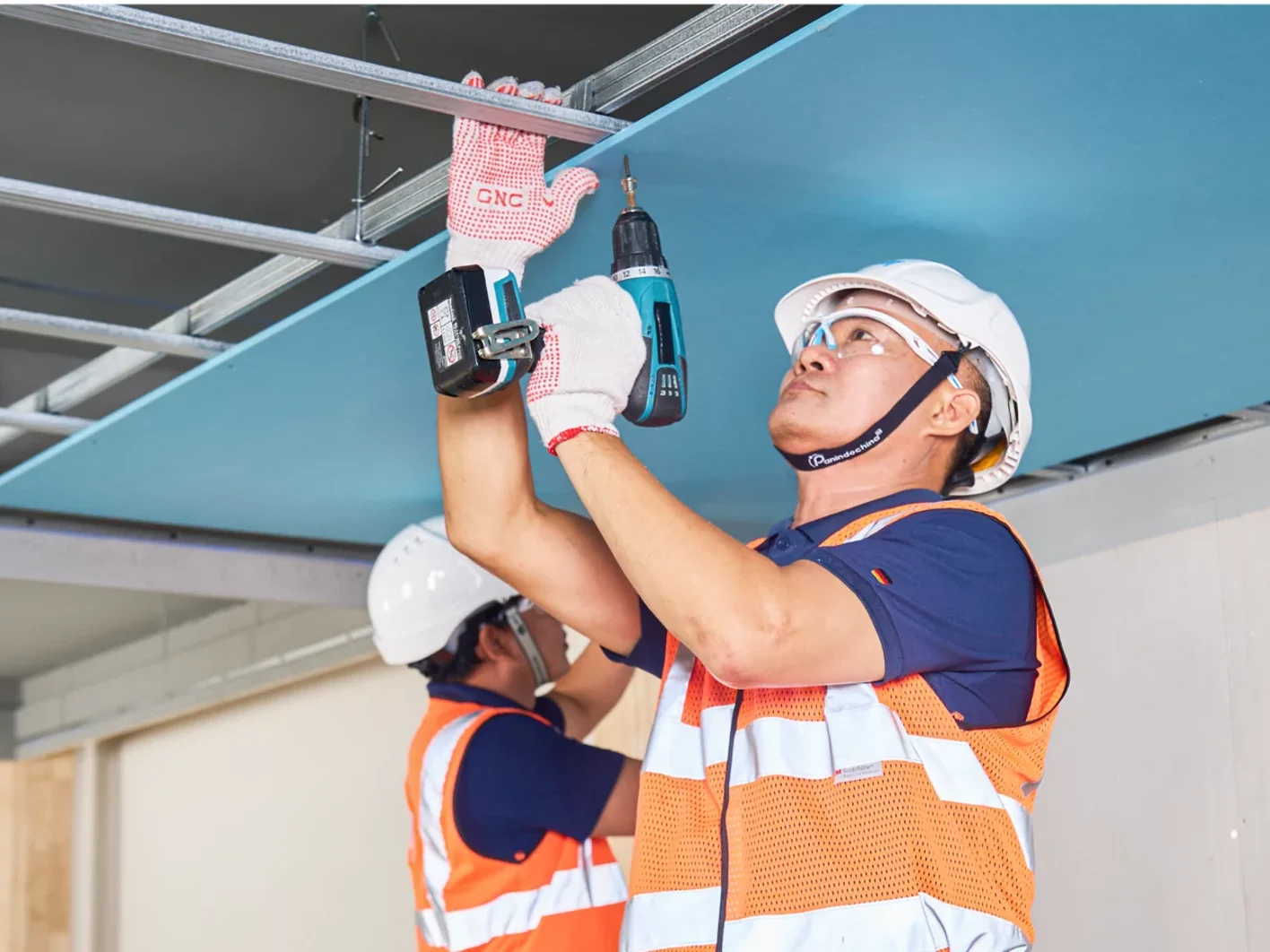
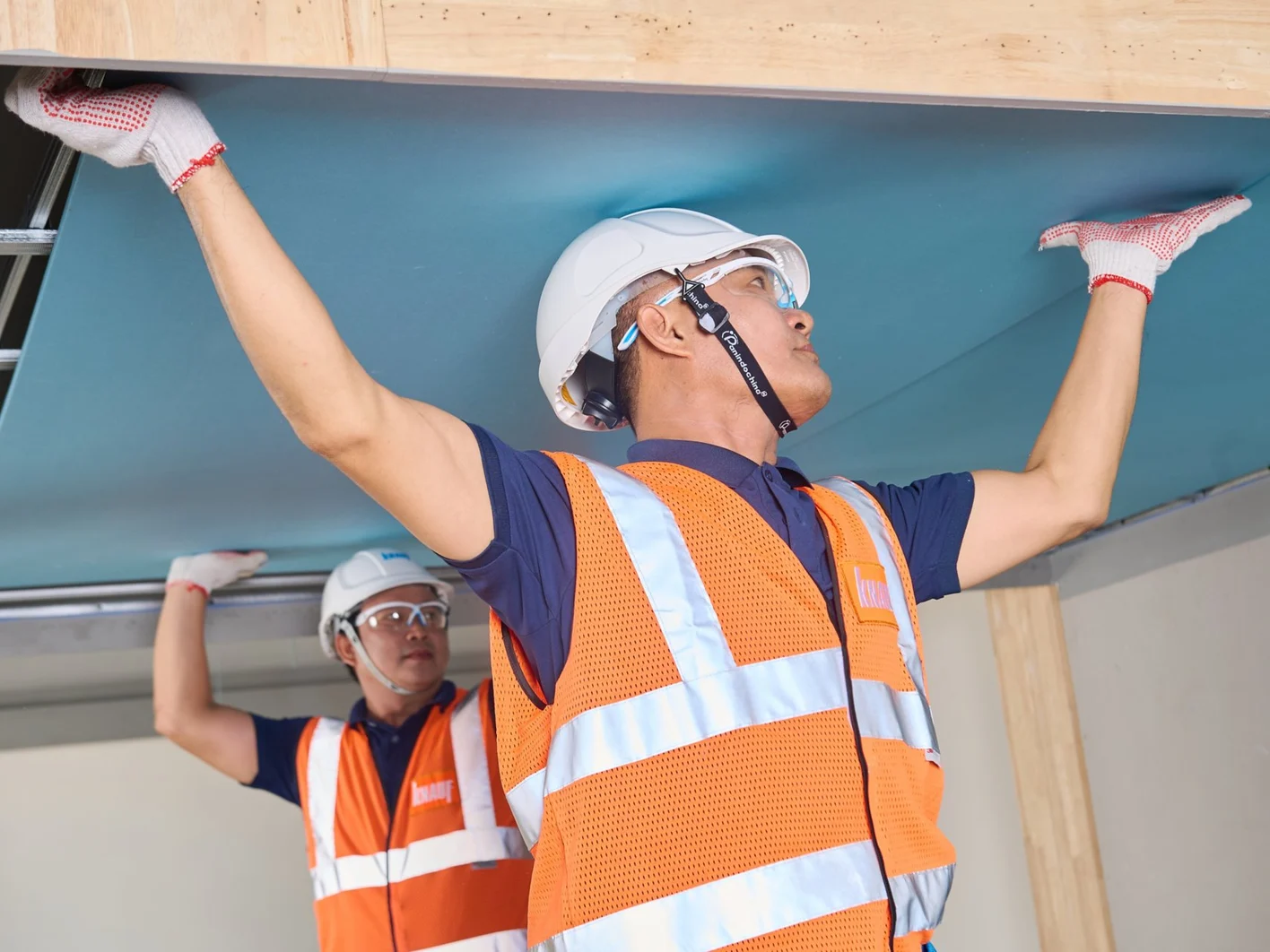
PRODUCTS USED IN KNAUF'S PREMIUM HEAT-INSULATING CEILING SYSTEM
4. How to Install Gypsum Ceilings to Optimize Thermal Insulation Efficiency
Correct technical installation of gypsum ceilings ensures aesthetic appeal and maximizes the thermal insulation and heat resistance of the building. Below are the crucial steps in the installation process:
Step 1 - Establish the Framework System:
The framework system must be installed securely, with evenly distributed channels to enhance ceiling stability. It is recommended to use appropriate accessories such as hanger wires and Xtra double connection locks for uniform systems, or threaded rods for fishbone systems.
High-quality, synchronized accessories should be chosen to ensure safety and long-term durability for the project. If the framework rusts or low-quality accessories are used, the ceiling structure will degrade over time, affecting the durability and thermal insulation efficiency of the gypsum ceiling system.
Step 2 - Install the Insulation Layer:
Before installing the gypsum boards, lay a layer of insulation material on top of the framework to enhance heat resistance. Ensure the insulation layer is evenly covered, leaving no gaps to prevent heat loss and ensure optimal thermal insulation efficiency.
Step 3 - Install Gypsum Boards:
Install the gypsum boards onto the fixed framework. Use specialized screws to secure them firmly, ensuring the gypsum boards are tightly fitted together, minimizing gaps.
Step 4 - Complete the Installation:
After installing the gypsum boards, use specialized jointing compound to treat the joints, ensuring a smooth and seamless surface, which contributes to the ceiling system's durability. Apply an additional coat of heat-reflective paint to enhance thermal insulation, while also perfecting the aesthetic appeal of the gypsum ceiling.
Adhering to the correct installation process will help the gypsum ceiling maximize its heat resistance, maintain stable temperatures, and reduce energy consumption. Additionally, you should learn more about how to make a gypsum ceiling to find an effective heat-resistant solution for your living space.
Gypsum heat-insulating ceilings help limit heat transfer, save energy, and create a comfortable living space for users. With these outstanding advantages, they are an ideal choice for modern buildings, meeting the demand for a convenient and sustainable living space.
If you would like to know more details about Knauf's gypsum board products, please fill in your information for consultation to receive specific and accurate advice.
Leave your details- Our team will get in touch soon!
At Knauf Vietnam, we are dedicated to providing exceptional support for all your construction needs. Whether you have questions about our products, need technical assistance, or want to learn more about our services, we are here to help!
- Our Entities
- Knauf Gypsum
- Resources
- Products
- Download Center
- Our Services
- Connect with Knauf
- Contact Us
- Blog
- Global Career
- Social Channels