Acoustic Solutions
Acoustic and soundproofing solutions, also known as acoustic design solutions, are considered one of the most complex aspects of architecture and construction. Depending on the intended use of a building or room, acoustic requirements encompass several aspects, such as: sound control between spaces, sound control within a single space, or auditory effectiveness (listening quality) in meeting rooms and auditoriums. Each space presents unique technical challenges. At Knauf, we offer acoustic solutions that combine various materials to meet these specific needs.
Sound, by its nature, consists of vibrations that propagate through physical mediums like air, water, or solid objects, only becoming an auditory experience when they reach the human ear. While the perception of noise is a distinct personal experience, its negative impact on physical and mental health is undeniable. For this reason, thoroughly considering sound insulation factors, including the ability to control sound transmission both internally and externally, is crucial in building design.
Principles of Acoustics
Building acoustics is the science of controlling sound and noise within buildings, encompassing both sound insulation and sound absorption. These two fields focus on minimizing sound transmission between spaces and controlling sound within each space. There are two types of noise transmission through partitions: airborne and structure-borne, both of which need to be considered for optimal acoustic performance.
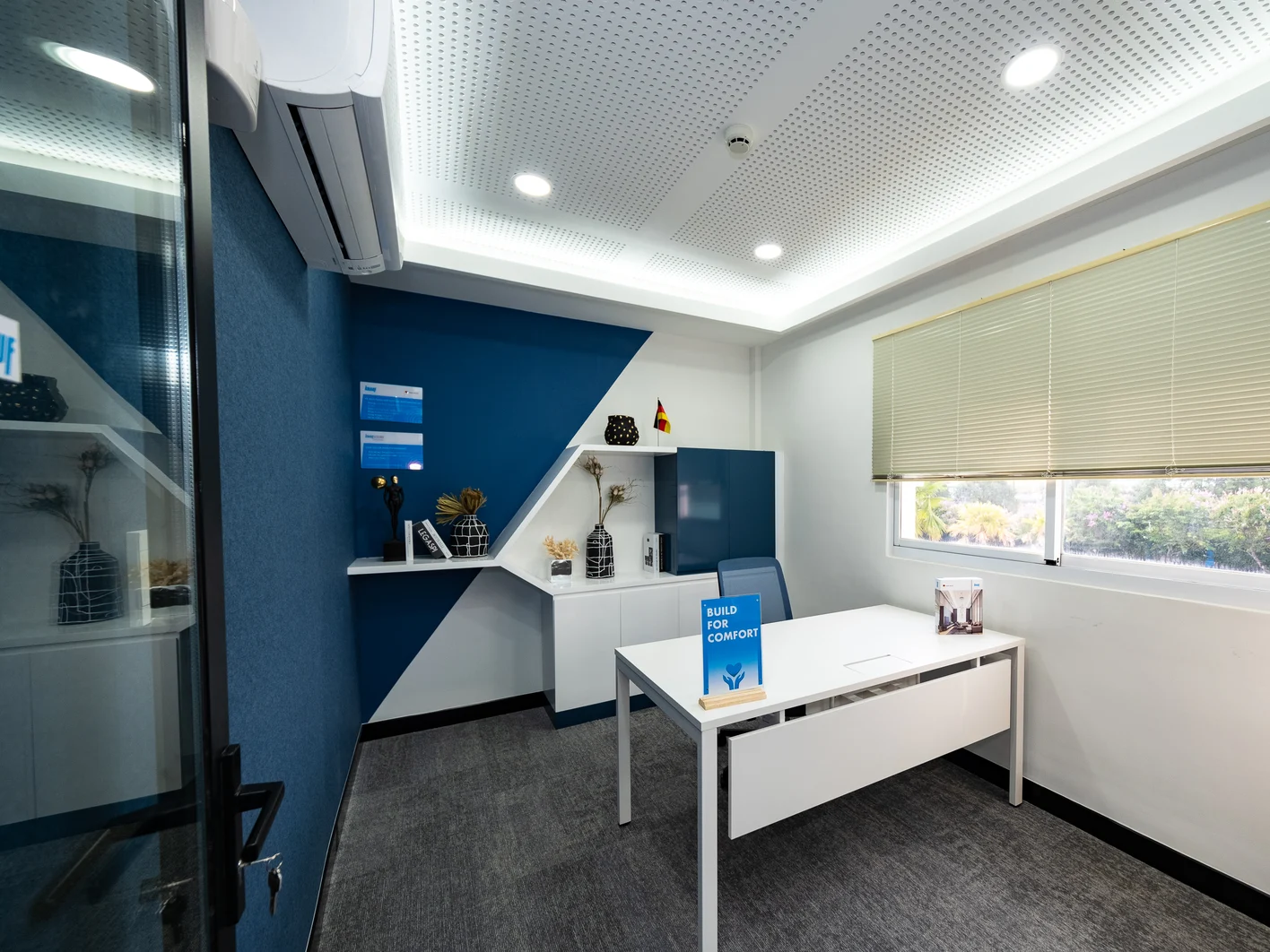
What is Soundproofing?
Soundproofing refers to the ability to reduce the level of sound when it travels through a separating element between two spaces. Theoretically, designing a building for soundproofing requires considering sound transmission in both directions: from the interior to the exterior environment, and from the exterior to the interior. A material's soundproofing capability is assessed based on the degree to which sound energy is reduced after passing through it. The difference in decibels (dB) between the incoming sound energy and the transmitted sound energy is the measure of the material's soundproofing performance.
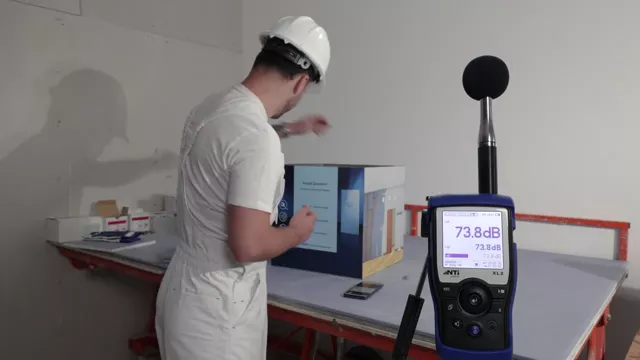
Testing on the sound insulation performance of the solution from Knauf
What is Acoustic Absorption?
When sound waves interact with a material, the sound energy disperses into three components: reflection, absorption, and transmission. Reflected energy refers to the portion of energy that bounces back into the original environment, absorbed energy is the portion of energy converted into other forms of energy within the material, and transmitted energy is the portion that passes through the material and continues to propagate. A material's sound absorption capability is evaluated based on the ratio of energy absorbed and transmitted compared to the incident energy. When most of the sound energy is absorbed or transmitted, while the reflected energy is very small, the material is considered to have good sound absorption properties. The general standard stipulates that a material with a sound absorption coefficient greater than 0.2 is considered a sound-absorbing material.
Testing on the sound absorption capability of the material (Video source: Vicoustic)
Methods of Noise Transmission
Airborne Noise
Airborne noise transmission occurs when sound waves are emitted in one space, travel through the air, and then pass through separating elements (like partitions) into another space.
Structure-Borne Noise (Impact Noise)
When a part of a building is subjected to direct or indirect impact or vibration, the energy from that impact travels through structures such as partitions, walls, and floors, and is then radiated back as noise on the other side. This phenomenon is known as structure-borne noise, also referred to as impact noise.
Impact Noise Insulation for Walls
- Common sources of structure-borne noise through walls include:
- Slamming cabinet doors (especially those mounted on shared walls between apartments).
- Noise from kitchen appliances operating on countertops placed against the wall.
- Noise from plumbing systems, particularly faucets, due to their direct connection to the wall.
- Clicking sounds of light switches when turned on/off.
- Vibrations from household appliances like dishwashers, washing machines, and dryers when they touch a shared wall.
Poor Sound-Absorbing Materials
- Brick Wall 0.025
- Concrete 0.03
- Glass 0.03
- Marble 0.01
- Granite 0.015
- Metal Surfaces 0.025
- Ceramics 0.015
Better Sound-Absorbing Materials
- Echobloc Acoustic Gypsum Board 0.7
- Glass Wool 0.68
- Rock Wool / Mineral Wool 0.72
- Acoustic Foam 0.5
- Wood Wool 0.57
How to Effectively Combine Soundproofing and Acoustic Absorption Materials?
While soundproofing and acoustic absorption materials operate on fundamentally different principles, in practical construction, they are often used together to optimize noise control. A prime example is the use of gypsum partitions as an effective soundproofing solution between spaces. The soundproofing performance of a gypsum partition system is influenced by many factors, with the density and thickness of the gypsum board being crucial. Products like Knauf FireShield, with their high density and optimal thickness, demonstrate superior soundproofing capabilities compared to standard gypsum boards.
Metal Profile System | Gypsum Board | Soundproofing (STC) | System+ Code |
|---|---|---|---|
Acoustic Frame | 2 layers of Knauf StandardShield 12.7mm per side | 55 | AS.3A |
Double Frame + Bracing | 2 layers of Knauf StandardShield 12.7mm per side | 55 | TS.3A |
Single Frame | 2x12.7mm Knauf StandardShield | 50-51 | SB.2A |
Single Frame | 2 layers of Knauf FireShield 12.7mm per side | 53-56 | SB120.1A |
To prevent sound transmission between rooms, it's also crucial to manage the acoustics within each room. To avoid issues like sound reflection, noise, and reverberation, you can use sound-absorbing materials such as Knauf Echobloc acoustic gypsum boards.
Metal Profile System | Gypsum Board | Sound Absorption Coefficient (NRC) |
|---|---|---|
Single Frame 76 | Echobloc R1 12x1200x2400 acoustic gypsum board | Up to 0.7 |
Supra/Pro Suspended Ceiling Frame | Echobloc R1 12x1200x2400 acoustic gypsum board | Up to 0.7 |
Thanks to their superior acoustic properties, sound-absorbing and soundproofing materials have become the top choice for many investors and clients. They are essential for creating ideal, comfortable, and convenient living and working spaces.
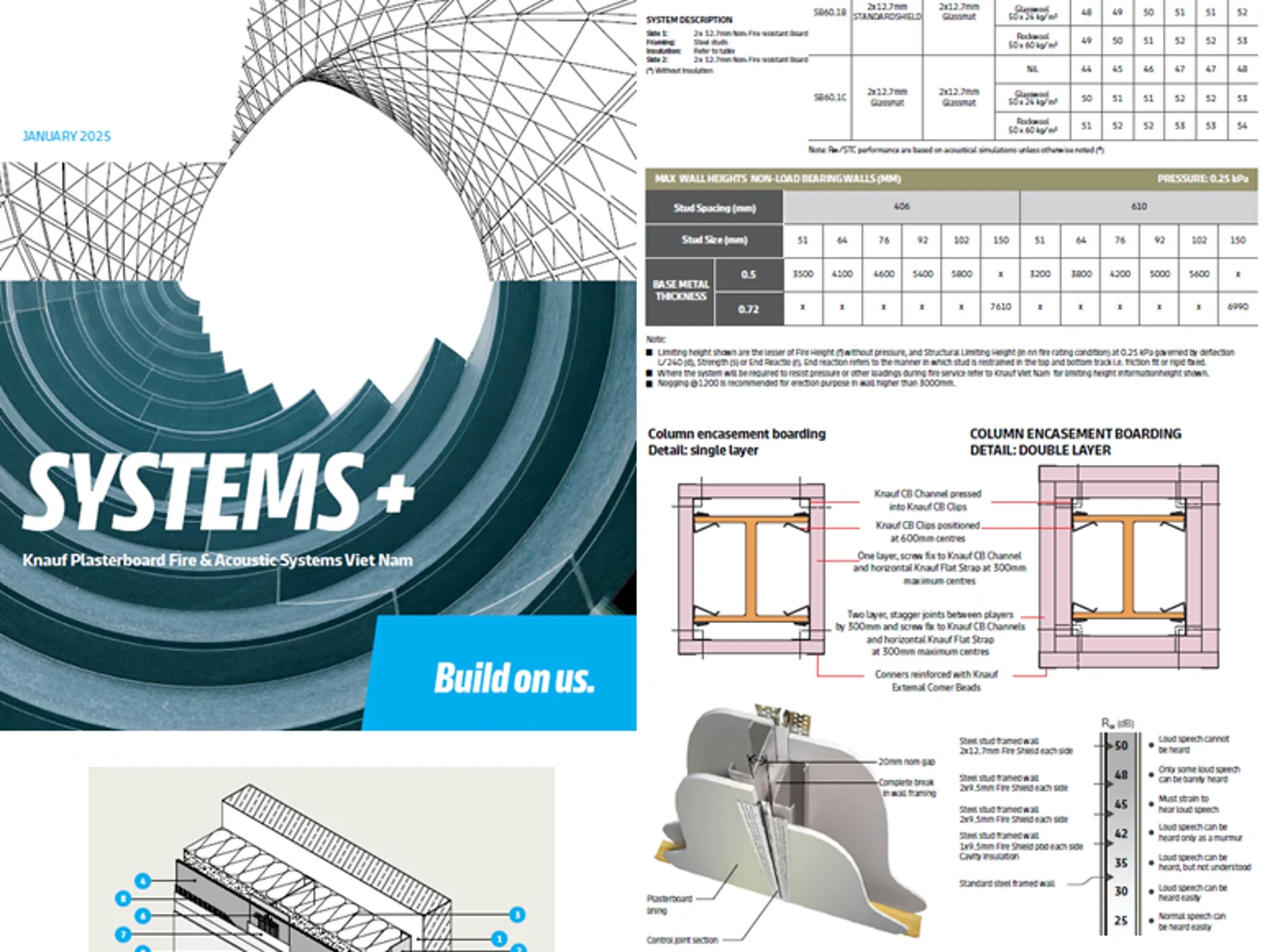


Technical drawing of Acoustic Drywall Solution


Access more technical drawings from Knauf to address your specific spatial requirements. Kindly provide your information in the form below, and our technical consultation team will send the files to your email.
- Our Entities
- Knauf Gypsum
- Connect with Knauf
- Contact Us
- Blog
- Global Career
- Newsroom