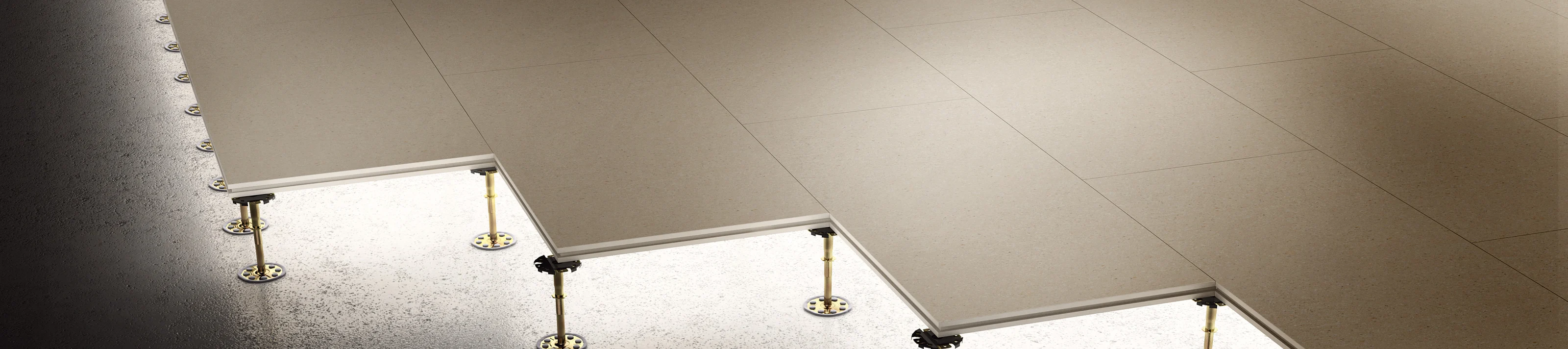
DB FIN
Know more about DB FIN
Get more information about our DB Fin Gypsum Fiber Panels


DB FIN
Discover the performance and versatility of DB FIN Gypsum Fiber Panels, engineered for spaces that demand static control, durability, and aesthetic flexibility.
Available in 30 mm and 36 mm thicknesses, with a choice of HPL or Antistatic PVC finishes and either steel or aluminum bottom layers, each panel is shown with its cover and underside.
Choose HPL for premium durability and visual appeal in high-traffic areas or opt for Antistatic PVC for superior moisture resistance and cost-efficiency.
Whatever your need, DB FIN panels ensure dependable performance across mission-critical and commercial applications.
DB FIN HPL (High Pressure Laminate)
- Composition: HPL is a rigid, multi-layered composite material. It's made by impregnating layers of kraft paper with phenolic resin, topped with a decorative paper layer (for design) and a clear protective overlay, all fused together under very high pressure and heat.
- Antistatic Mechanism: HPL typically achieves its antistatic properties through the intrinsic conductive nature of its resins and the overall construction, which allows it to dissipate static charges effectively to a grounded understructure.
Moisture Sensitivity | Maintenance | Cost | Installation | Lifespan |
|---|---|---|---|---|
While resistant to moisture, prolonged exposure to water can cause issues like swelling or cracking, especially in very dry or very cold environments. It's generally less forgiving with extreme humidity fluctuations than PVC. | Easy to clean and maintain; typically does not require waxing to maintain its antistatic properties. | Generally higher initial cost compared to antistatic PVC. | Can be more challenging to install due to its rigidity, often requiring professional installation. | Often has a longer lifespan (15-20 years or more) under normal conditions. |
DB Fin PVC (Polyvinyl Chloride)
- Composition: Antistatic PVC flooring is a type of vinyl flooring made primarily from polyvinyl chloride resin, along with plasticizers, stabilizers, fillers, and importantly, conductive materials (like carbon particles) that form an electrostatic conductive network within the material.
- Antistatic Mechanism: Its antistatic function is permanent due to the embedded conductive network that allows static charges to dissipate.
Flexibility & Ductility | Water Resistance | Wear Resistance | Appearance |
|---|---|---|---|
PVC is a softer, more flexible, and elastic material compared to HPL. This makes it less prone to cracking in very dry or cold environments where HPL might shrink. | Generally offers superior water and moisture resistance because it's a synthetic plastic material. | While durable, its surface wear resistance might be slightly weaker than that of HPL, especially under very heavy or concentrated loads. It can be prone to permanent damage from prolonged weight of heavy objects. | Available in various patterns and colors, often designed to resemble marble or other aesthetic finishes. |
Maintenance | Cost | Installation | Lifespan | Environmental Concerns |
|---|---|---|---|---|
Easy to clean. Some variations might benefit from waxing to maintain appearance, though antistatic types are designed to function without it. | Generally lower initial cost compared to HPL. | Often easier and quicker to install due to its flexibility. | Typically has a lifespan of 10-15 years. | PVC production and disposal can raise environmental concerns due to the chemicals involved, though many products now aim for low-VOC emissions. |
What DB FIN Product is right for you?
Choose HPL when | Choose Antistatic PVC when |
|---|---|
High traffic and heavy-duty wear resistance are paramount | Budget is a concern. |
Superior scratch and impact resistance are needed. | Superior water and moisture resistance is critical (e.g., areas prone to spills). |
A premium aesthetic or specific natural material look is desired. | Flexibility and ease of installation are preferred. |
The climate is consistently warm and humid. | The environment might experience dry and cold conditions, as it's less prone to cracking. |
Both are effective in controlling static electricity in sensitive environments, but their underlying material properties lead to differences in their performance characteristics, appearance, cost, and ideal use cases.
Fire Rating
System | Fire Rating |
|---|---|
DB FIN 30 PVC ALU | REI 30 |
DB FIN 30 HPL ALU | REI 30 |
DB FIN 30 PVC STL | REI 30 |
DB FIN 30 HPL STL | REI 30 |
DB FIN 36 PVC ALU | REI 60 |
DB FIN 36 HPL ALU | REI 60 |
DB FIN 36 PVC STL | REI 60 |
DB FIN 36 HPL STL | REI 60 |
Load Capacity
System | Point Load (Full system) |
|---|---|
DB FIN 30 PVC ALU | 3 kN/m2 |
DB FIN 30 HPL ALU | 3 kN/m2 |
DB FIN 30 PVC STL | 4 kN/m2 |
DB FIN 30 HPL STL | 4 kN/m2 |
DB FIN 36 PVC ALU | 4 kN/m2 |
DB FIN 36 HPL ALU | 4 kN/m2 |
DB FIN 36 PVC STL | 5 kN/m2 |
DB FIN 36 HPL STL | 5 kN/m2 |
Discover our products
Download the Technical Datasheet


Knauf Cares
Learn more about our commitment to sustainability and how we're making a difference. Discover the initiatives and practices we’ve implemented to promote environmental responsibility.