Education
Acoustic ceilings and walls for better learning spaces.
Solutions to support learning through acoustic balance, light reflectance, and improved air quality.
Speak to our team
Optimising sight and sound, to support learning
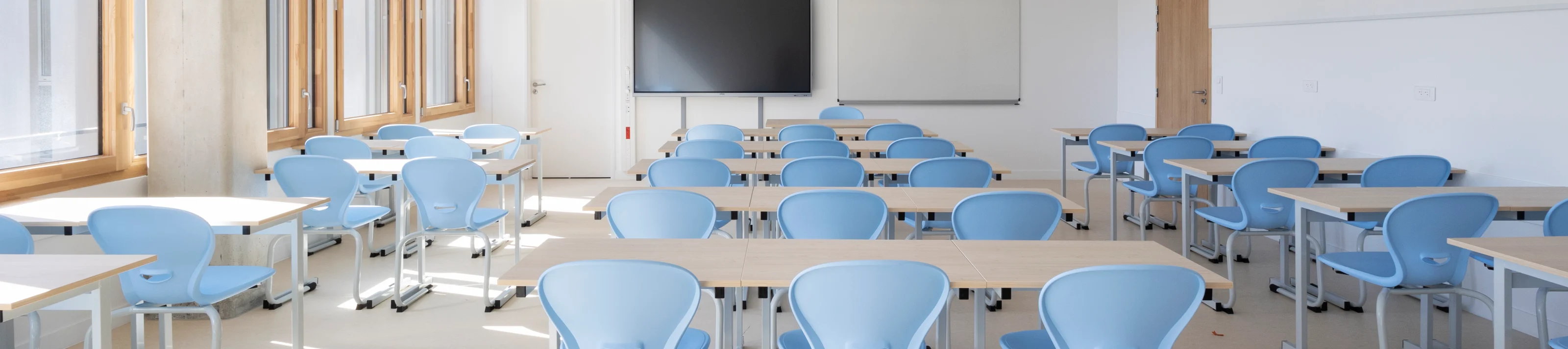
Whether in schools or universities, education buildings should be designed to optimise sight and sound. The right use of light and colour results in stimulating spaces that nurture concentration and creativity. The ability to hear and communicate is also central to the learning process and any unwelcome noise from outside the classroom could have a detrimental effect. Poor acoustics can also muffle or distort sound, making it harder for teachers to be clearly understood.
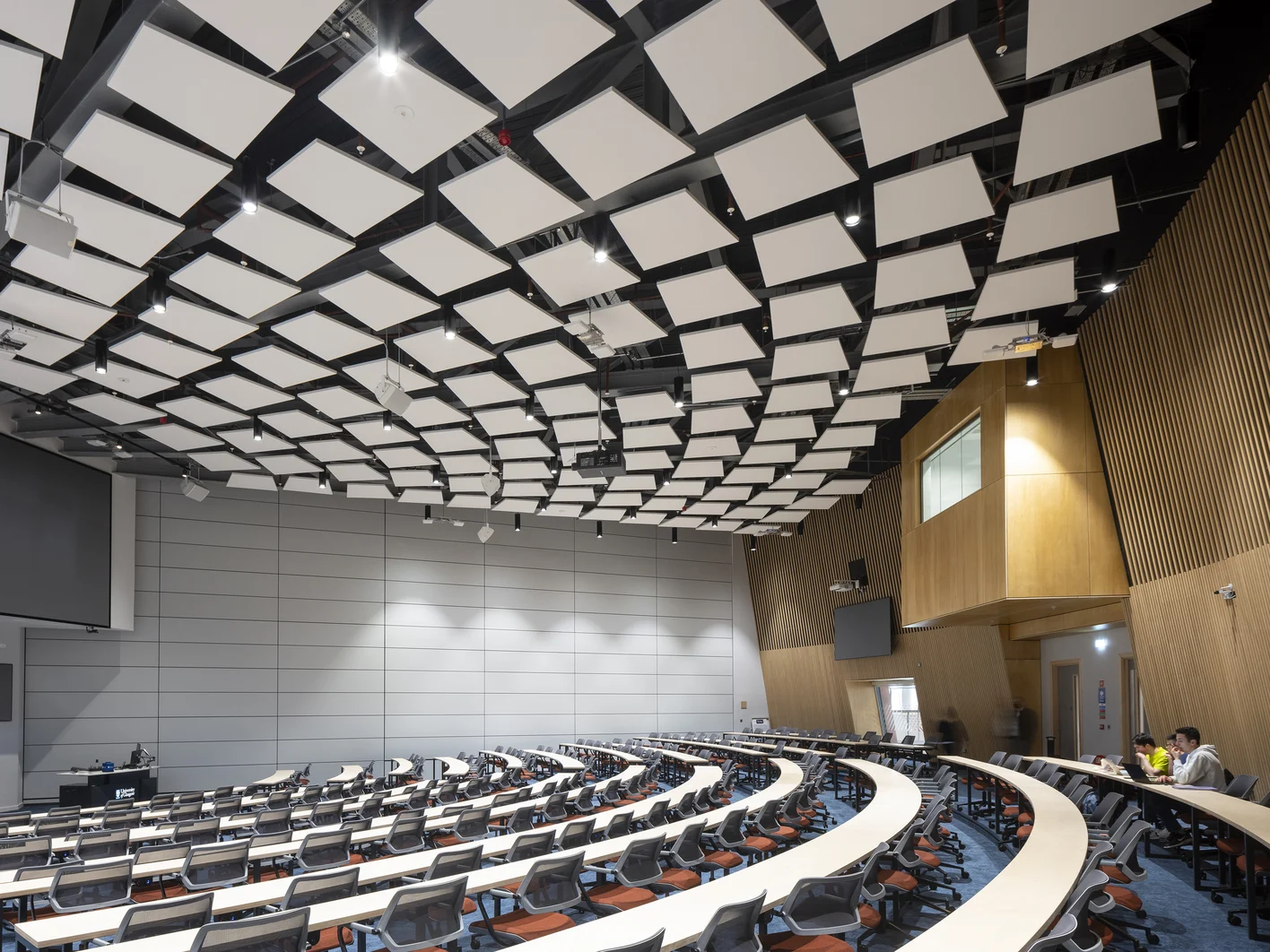
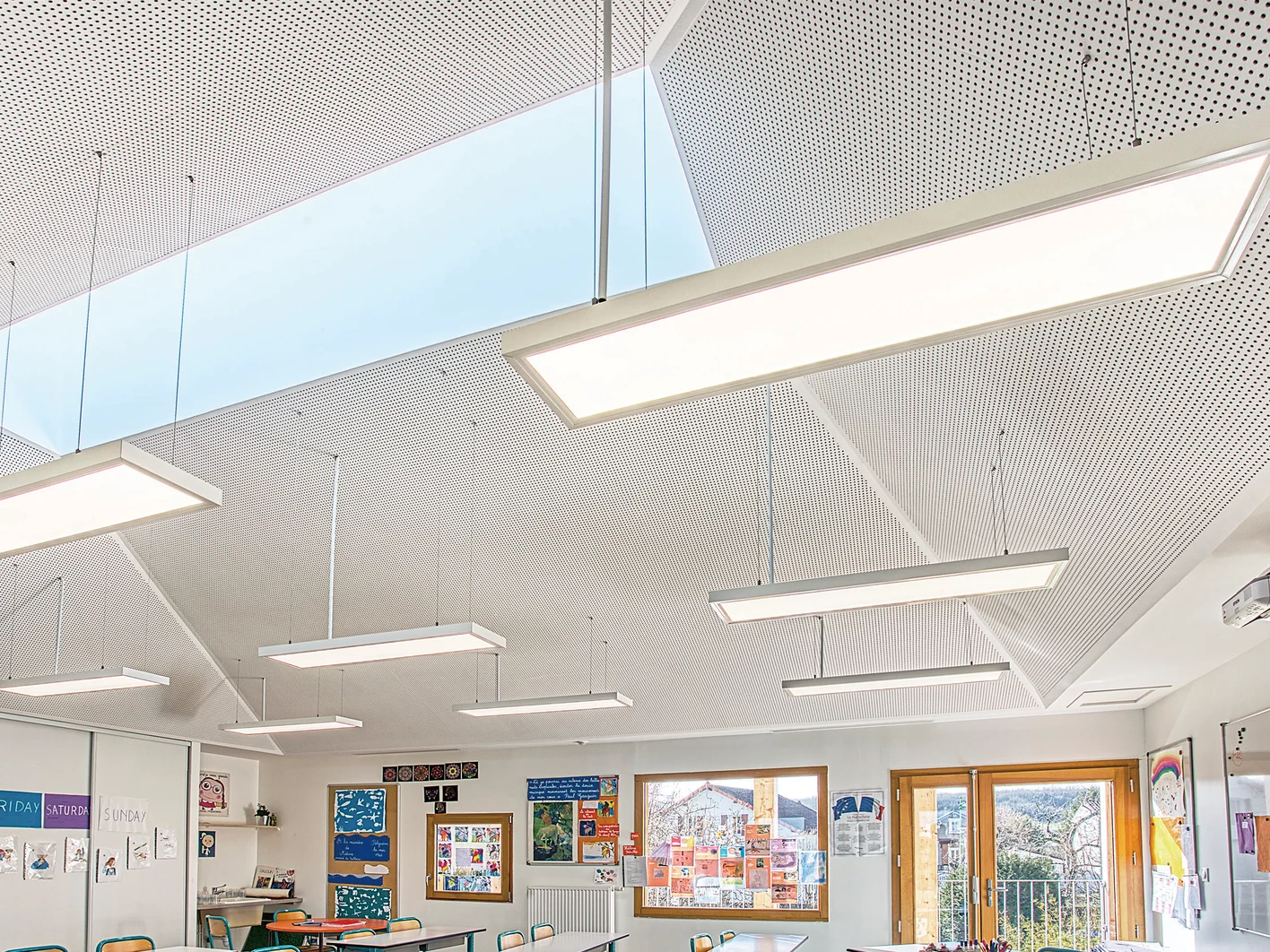
Our ceiling and wall solutions deliver acoustic performance to assist learning in any space – from small classrooms to sweeping auditoriums, hushed libraries to humming gymnasiums. Our ceiling tiles are also available in many designs and with high light reflectance, to keep students alert.
Our Technical Services team are here to guide you through every step of the process.
Benefits of our solutions for Education
Explore our product range
Products designed to support learning and wellbeing in schools, universities, and other education settings.
We’re here to help
Our Technical Services team are here to assist you at every stage of the specification and construction process. Get in touch today and unlock tailored solutions for your Education project.
FAQ
Suspended ceilings are the largest open and mostly unaltered space within a classroom. Suspended ceilings can provide suitable passive acoustics, where the tile materials either absorb or reduce sound. But they are also the most suitable place for the integration and seamless mounting of active acoustic treatments, such as speaker systems.
If there is too much reverberation in a room, it can make speech unintelligible. Many acousticians recommend a minimum RT of 0.4 seconds to prevent the space from becoming too acoustically dead (especially as furnishings and children will further reduce the RT).
Volatile Organic Compounds (VOCs) are potentially harmful emissions linked to allergies, asthma and even cancer. These pollutants can enter a building from the outside, indoor substances, such as paint or perfumes, and even electronic devices, affecting the air quality. Ensuring that we have good, clean indoor air quality is vital to designing a safe building.
- Our Entities
- Knauf Gypsum
- Knauf Insulation
- Resources
- Products
- Download Center
- Our Services
- Connect with Knauf
- Contact Us
- Global Careers
- News