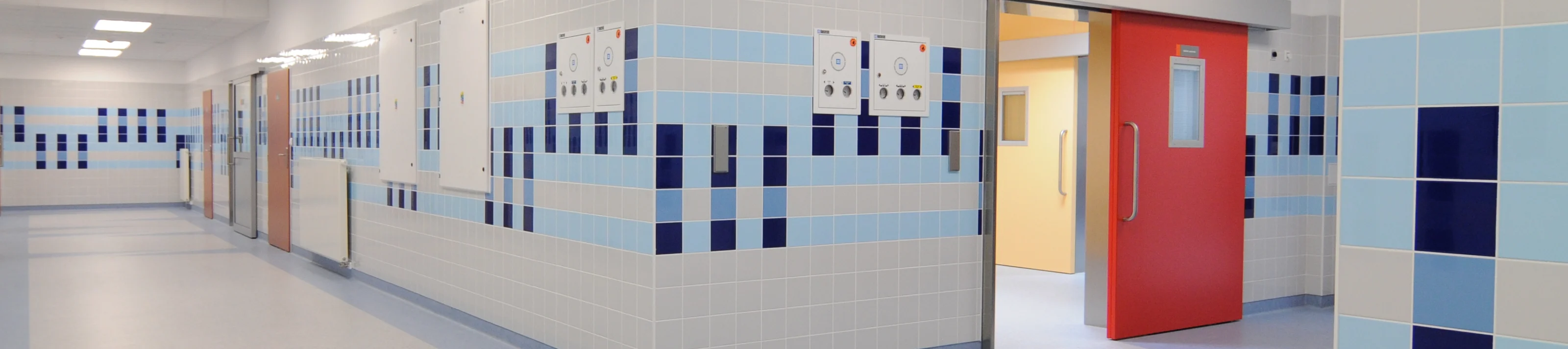
Healthcare
Acoustic walls and ceilings for comfort and wellbeing.
Healthcare construction solutions that prioritise hygiene, acoustics, and safety, for greater occupant wellbeing.
Speak to our team
Benefits of our solutions for Healthcare
For specific product related solutions, we have you covered

Explore our product range
Products designed to meet the highest standards of hygiene and safety.
FAQ
Yes, Knauf solutions can be tailored to accommodate the unique needs of various healthcare environments, including hospitals, clinics and care homes. These solutions are adaptable, offering custom designs, colours, perforations, sizes, and specifications that align with specific acoustic, safety and aesthetic requirements, vital for healthcare operations.
Hospitals commonly use specialised ceiling solutions that prioritise both hygiene and acoustics. Acoustic ceilings are essential for creating a peaceful environment by reducing noise, which is crucial for patient comfort and clear communication among staff.
To address stringent hygiene requirements, ceiling tiles like the BIOGUARD® and HYGENA ranges can be used. BIOGUARD® is designed for areas demanding intensive cleaning and superior hygiene, preventing the growth of numerous bacteria and fungi. HYGENA offers excellent acoustic and light reflectance properties, achieves a CP5 particle decontamination rating according to NF S 90-351:2013, and limits bacterial growth. These specialised ceiling tiles also offer practical benefits, such as easy access to utilities, supporting efficient maintenance and adaptability to evolving healthcare needs.
Knauf Insulation’s products are low-VOC. Volatile Organic Compounds (VOCs) are emitted by construction products throughout their life – during manufacture, while being installed, and afterwards in the building. Research shows these VOCs can pose serious risks to human health. In some countries, managing VOC emissions is now mandatory. Even where it’s not yet, voluntary standards are increasing in popularity, as building owners and designers become aware of the harmful impacts of VOCs and seek to create better buildings with improved indoor environments. Progressive employers too are increasingly mindful of the risks of workplace exposure for installers.
- Our Entities
- Knauf Gypsum
- Knauf Insulation
- Resources
- Explore All Products
- Download Center
- Connect with Knauf
- Global Career
- News