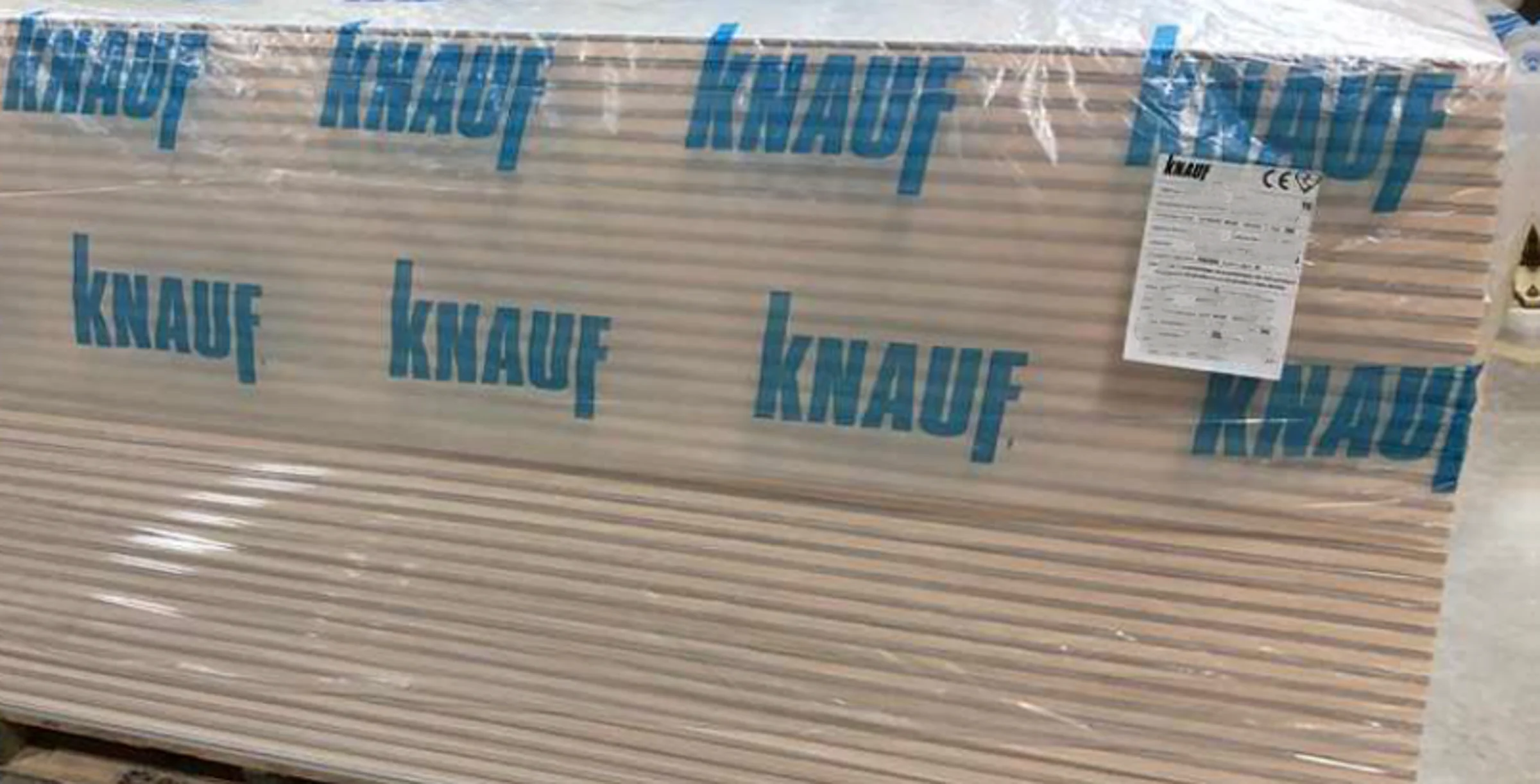
We Move to Recycled Pallet Hoods
18 April 2023
We have taken another step towards achieving our sustainability goals, specifically our target of being a larder in the circular economy, by changing the pallet hoods to use 30% recycled content. The hoods, which are used on our laminated boards and are available to purchase on other boards, have the benefit of maintaining their strength and quality, while using less virgin resources.
Switching to a sustainable supply
The move toward using 30% recycled content in our pallet hoods represents the perfect step to move into this direction and a real win at scale, given the number of hoods used.
Furthermore, the 30% recycled content used in pallet hoods provides a more responsible solution, whilst still ensuring the robust strength of the plastic (which is also easier to recycle on site) without being detrimental to the customer.
Hannah Wrigley-Stevens, Buyer at Knauf, was enthusiastic about this change.
“Moving to 30% recyclable content for our pallet hoods strikes the right balance between strength and sustainability. It also shows that we are serious about achieving our sustainability goals. This is something that we feel our customers will care deeply about, given that not only are the hoods made from recyclable content they are themselves recyclable and can be recycled in standard plastic recycling.”
“We are currently in the process of updating our customers on these changes to ensure they are fully aware of the recyclable nature of the pallet hoods and why this matters. This includes updating our artwork to state this.”
Other areas of supply
It's not just the pallet hoods that we are looking to develop within the circular economy.
In searching for other areas to make improvements on recycled content, we are trialling the use of 30% recyclable content in our stretch wrap.
As Hannah Wrigley-Stevens said. "We're currently looking at making our stretch wrap more sustainable and recyclable. Now we are trialling the 30% model across all products at both our sites in Sittingbourne and Immingham."
"We've seen some very positive developments during the trial periods in both areas. This includes a gram saving and a reduction in micron of plastic which means the weight of the plastic has been reduced."