With the updated Building Regulations Part L (England) calling for greater energy efficiency in new homes, it’s important for housebuilders to consider how thermal bridging might be reducing the performance of their builds. But what exactly is a thermal bridge? And how can you avoid them going forward?
WHAT IS A THERMAL BRIDGE?
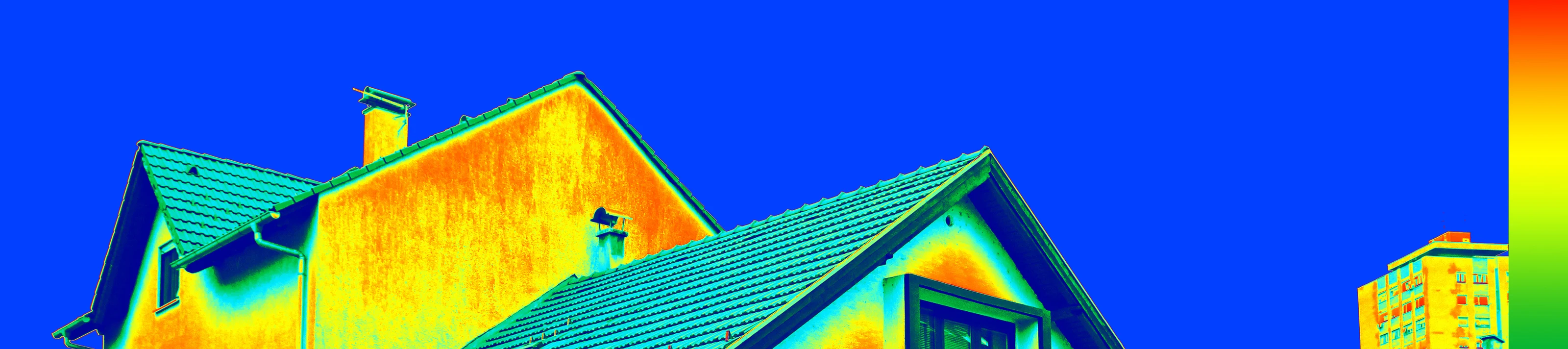
Thermal bridges are essentially ‘thermal weak spots’ in the fabric of a building, where heat can pass in or out more easily. A thermal bridge (sometimes also called a ‘cold bridge’) often occurs where there are gaps in insulation, either due to poor installation or where the material is interrupted by elements like roof lights, windows or penetrations.
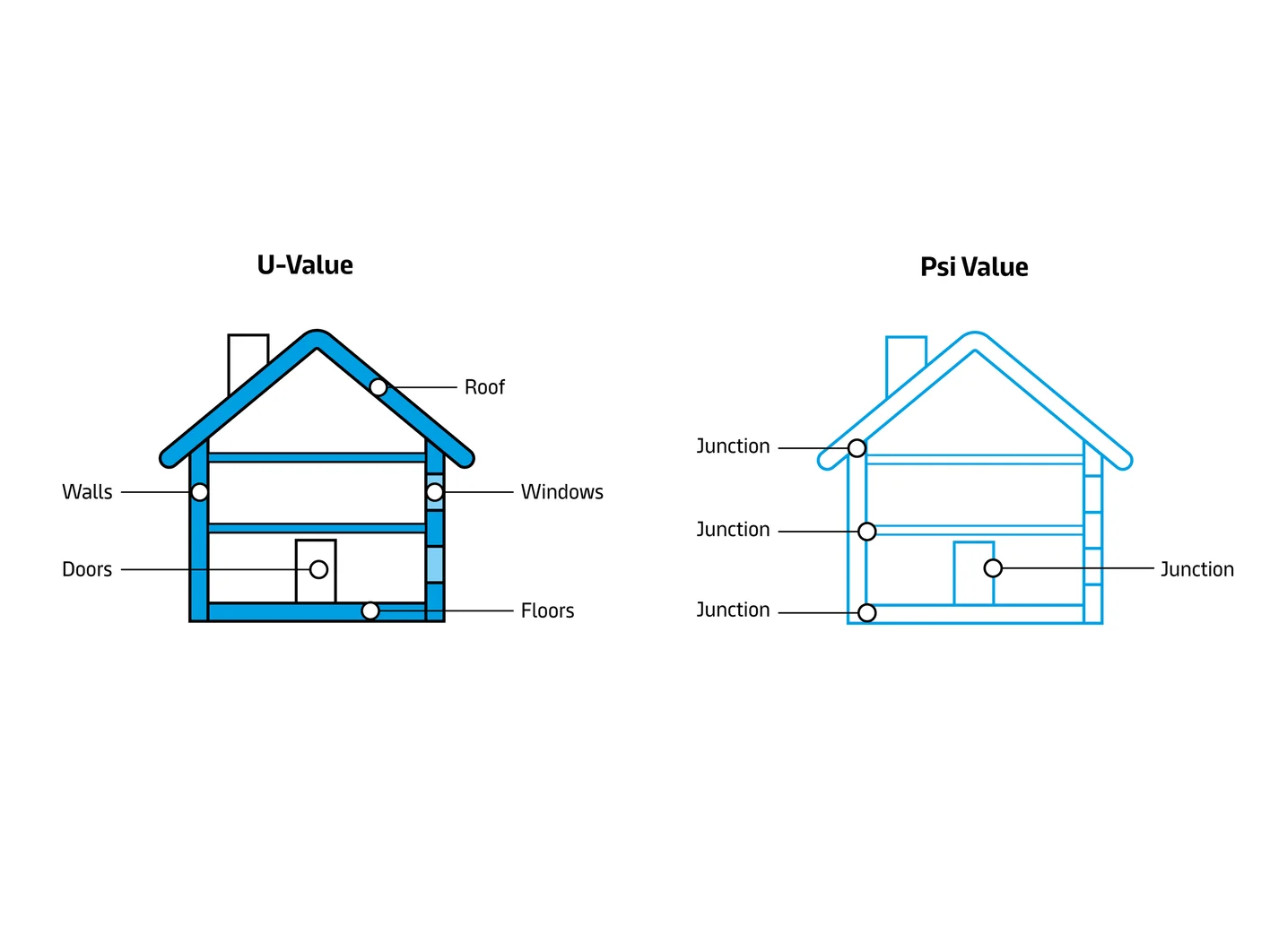
When insulation is interrupted in a predictable, repeating pattern, for example by floor or ceiling joists, it’s called a ‘repeating thermal bridge’. When the cause of the interruption is irregular, for example at a wall-to-floor junction, around a window or a single penetration, it is called a ‘linear’ or ‘non-repeating thermal bridge’.
HOW DO YOU MEASURE THE HEAT LOST THROUGH A THERMAL BRIDGE?
Repeating thermal bridges are accounted for in U-value calculations, because they can be quantified as part of a broader surface area (like a wall or floor). Non-repeating thermal bridges relate to the heat loss properties of junctions, so they are measured with Psi-value calculations.
In the past, SAP assessors have had the option to produce these Psi-value calculations using the Government’s ‘approved’ Accredited Construction Details (ACDs) – a pre-set list of standardised details, based on different types of thermal element and junction. However, these became outdated and have been removed from the latest version of the SAP method. Assessors can still use non-government ACDs, as well as SAP’s default values, but the latter have been adjusted to be less favourable.
HOW CAN YOU PREVENT THERMAL BRIDGES FROM OCCURRING?
Minimising the risk of a thermal bridge in your insulation comes down to two key areas:
Accurate design
Working with manufacturers who can provide current, detailed technical information, will result in more accurate Psi-value calculations. With a more precise understanding of the non-repeating thermal bridges that might occur in your build, designs can be refined to optimise thermal efficiency.
Quality installation
Avoiding unnecessary gaps in your insulation (and the resulting fabric heat loss) directly relates to the quality of your installation. To get the best results, work with manufacturers who provide support and guidance materials along with their products.
Also consider how easy your insulation is to install correctly. For example, spaces between rigid insulation boards need to be taped with precision, leaving plenty of room for human error. Mineral wool insulation on the other hand, is made of strands of material, which ‘knit’ together when individual slabs meet, minimising gaps that could lead to a thermal bridge.
YOUR NEXT STEPS
We understand that your time is precious. So, to help streamline your process, we’ve created a free online Psi-value calculator, which your SAP assessor can use to generate detailed, product-specific calculations for your build.